All posts by Alvin Richards

Your Church is Too Small

My prayer is not for them alone. I pray also for those who will believe in me through their message, that all of them may be one, Father, just as you are in me and I am in you. May they also be in us so that the world may believe that you have sent me. I have given them the glory that you gave me, that they may be one as we are oneI in them and you in me-so that they may be brought to complete unity. Then the world will know that you sent me and have loved them even as you have loved me. (John 17:20-23 NIV)

As I prepared to preach on this text I had read countless times, I “could not escape the
truth of what Jesus was asking the Father. He prayed for the oneness of all his followers.” And while he had some sense of what it did mean, he was certain that it had “absolutely nothing to do with what is commonly called ecumenism” – the effort by Christian leaders and churches to create a movement of greater visible unity or cooperation. However, the Spirit of God was working in his own heart and life. Understanding and applying this call has occupied much of my life ever since.

I am, the president and founder of ACT 3 (Advancing the Christian Tradition in the Third Millennium), which has wide experience in many contexts. Having served in pastoral ministry for 20 years, and now, along with ACT 3 responsibilities, I serve as adjunct professor of evangelism at Wheaton College Graduate School. I travel extensively, speaking and consulting with leaders and organizations around the world in a quest to promote “missional-ecumenism”- to ignite a movement of “world-changing leaders who will intentionally invest their lives in the kingdom of God.”

A “gospel-focused and Scripture-based” approach to Christian unity centered within the framework of ministry. Without question early Christians had disagreements as any New Testament reader readily recognizes, and yet, the defining identity for the disciples of Jesus is their genuine love for one another. I have embraced the spirit of Christ’s prayer for unity and am on a quest to convince all believers of its vital importance. In the words of Jesus:

A new commandment I give to you, that you love one another: just as I have loved you, you also are to love one another. By this all people will know that you are my disciples, if you have love for one another.   (John 13:34-35 ESV)

The Unity Factor: One Lord, One Church, One Mission

The Christ-spoken appeal:

What distinctly marks those who belong to Christ? What truly distinguishes them from those who are not the church in this present age? It is not a cluster of doctrinal beliefs, as important as beliefs and doctrines are for healthy religious life. It is not a label or a particular social marker. Rather, is not the true mark of the church love? Furthermore, is not this love both Christ’s love for his flock?

Love for Christ is, in a profound way, the defining mark of true Christians (1 John 3:11,14,16-18, 23). We can ask a myriad of questions about our own profession of faith in Christ. However, at the end of the day, it comes down to the same question Jesus asked Peter: ‘Simon, son of John, do you love me?’     (John 21:15-17). And as John’s epistle clearly notes, genuine love for Jesus will be seen in our love for one another. …and their love for their shepherd and one another?

I believe the only way Christians will adequately respond to the call for unity is to recognize three foundational truths – “three ones” – one Lord, one Church, and one Mission.

Following his study of the “three ones”, I will answer the question, “What does the unity factor look like?” You will see glimpses of my personal journey toward this understanding of “missional-ecumenism.”

One must pursue the unity factor. “The vision we need to grasp is one of visible unity in reconciled diversity. For churches and mission organizations taking seriously the biblical mandate to unity, there are six practical steps toward missional-ecumenism.

This is not a call to dismiss doctrinal convictions, nor is it an attempt to pretend that we do not have real differences. It is, however, a challenge to recognize that every person truly believing in the Lord Jesus Christ belongs to Christ and so to one another. And as such, we are one Church universal, and we have one mission to proclaim the gospel of this one Lord.

Timothy George, founding dean of Beeson Divinity School of Samford University (Birmingham, Alabama), in his Foreword to the book, reminds readers of English Baptist pastor William Carey’s (1761-1834) call for a coordinated approach to world evangelization in 1810. Though nothing much came of Carey’s call, Timothy George notes that 100 years later the International Missionary Conference convened in Edinburgh, and 200 years later the Third Lausanne Congress on World Evangelization was held in Cape Town, South Africa. He observes:

The modem quest for Christian unity was born on the mission field. Its aim was not the building of a supra-ecclesiastical bureaucracy but rather the unhindered declaration of Jesus Christ, the sole and sufficient Savior of the World.

-John Armstrong
Purpose & Power of Men


1) VISONARY AND LEADER
God took man and put him in the garden of Eden to take care of it and the lord God commanded the man(Gen 2:15-16)
Whom did the lord command The male-man.  The male being first received all information.  The female wasn’t formed until instructions where given the male. The male was given the charge to be the visionary and leader.  The male is to be responsible for everything under his jurisdiction, this doesn’t mean women don’t have the capacity, but it was entrusted to the male. You don’t canvas for votes in the family to become the head.  You are responsible, God made it so not the family.  A man shouldn’t get married and say to his wife what are we going to do? Well, we will just wait on the Lord, we’ll see where we are going when we get there.  That’s ridiculous!!!.  A man is giving vision, while the woman is there to make sure he accomplish it.  He knows exactly where he is going.  He makes plans, he sees the future, the woman is a help in achieving it.
2)TEACHER
God told Adam, do not eat of the tree, but he didn’t tell Eve.  Which means it was Adams responsibility to teach Eve and guide her.  If you were the first one to discover something and someone else shows up at the scene needing to know something, what does that make you?  Primarily God made men responsible for teaching his ways, not that women are unable to teach.The male must be responsible for godly instructions to their family.  May not be the way things are, but the way it supposed to.  God expect males to reveal his will and word to females.
Paul told Timothy in 1Tim3.  If a man wants to be a leader in the church let him first get his house in order.
3)CULTIVATOR
God gave male an assignment of cultivating the garden Gen2:15. One of males responsibility is to cultivate. Means to make something grow, and produce greater yield.You as a man is supposed to cultivate and develop everything around you. Make both people and things better. So if you as a man marries a wife and she is looking Haggard, after months of marriage,then you’ve not cultivated her. Every part of the society should be developing if there are real men. Unmarried men what are you cultivating?? Young girls When a young girl comes into your presence she should leave a better person than she came.When she is leaving and someone ask what happened to you, she should be able to say i met a man who told me he wouldn’t sleep with me. Cultivate this young ladies, make them better don’t drag them down.
4)PROVIDER
Primarily, it is very simple. You don’t have to be a batman as a man or compete with Arnold Schwarzenegger. You dont have to develop big muscles, to fulfil that purpose. Don’t be mad at Adam, he is not the reason why you have to work, before the fall in Genesis2 work was ordained. Work is not a curse.Gen2:2-3. God worked. What is the significance of work It exposes your potentials. God gave male work not only because it exposes his potentials but enables him provide for those whom he is responsible in his position as a visionary and leader. Provide comes from a latin word meaning to ‘see ahead’. The Male should be a visionary, he should have a vision for his life and he should work to see it accomplished, both for him, his family and others under his Care. Before a man needs a woman in his life, he needs work. God never told the woman to work. Now don’t get nervous, its just a societal demands. God gave man and not the woman the responsibility to provide for the home. A woman is supposed to marry someone who is already able to provide. A man is to supply the needs of his family.
He is build physically stronger than the female, particularly in his upper body because of God’s command for work
5)PROTECTOR
The lord God took man and put him in the garden to take care of it. Another responsibility of man is to ‘take care’. He was to take care of everything, the woman, plants, animals, everything. God never told the woman to take care but the man. Why Because the woman is one of the things we are supposed to protect. God designed the male to protect everything under his care and covering. A male is a natural protector. His physical frame is an evidence of that but also his mental capacity. The way he is structured psychologically is designed to protect. Any woman should feel safe with you. But you see some men raise up their hands on women they were meant to protect… To protect, God gave men
Physical strength
Logical thinking
A sense of territorial protectiveness
A drive to excel “EGO”


God’s Health Plan

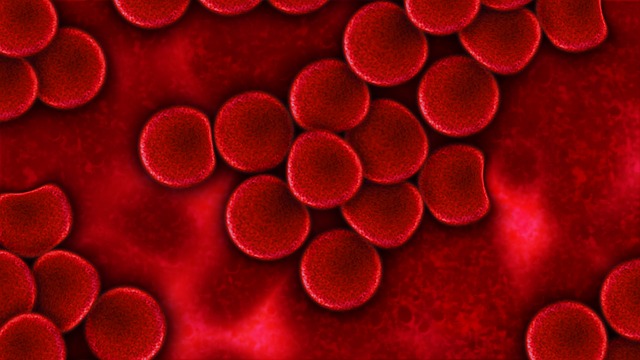
Do you think knowing your blood type is only important in the event of a transfusion? Think again! Research indicates that your blood type is a key genetic factor that influences many areas of health and well-being. 

Throughout your life, you’ve probably observed that some people tend to lose weight more easily, while for others, their weight is an ongoing battle. Or wondered why some people are plagued by chronic illness while others stay healthy and vital well into their advanced years. Very simply, the answer is in your blood type. 

Knowing your blood type is an important tool for understanding how your body reacts to food, your susceptibility to disease, your natural reaction to stress, and so much more. A single drop of blood contains a biochemical makeup as unique to you as your fingerprint. 


Below are five facts about your blood type that could change your life: 

Your blood type may predict your susceptibility for certain diseases. 

Research has found that individuals of certain blood types may be at a higher risk for certain diseases; studies have found that people with blood type O have a lower risk for heart disease, but a higher risk for developing stomach ulcers. People who are blood type A have higher risks of microbial infections, but Type A women experience a higher rate of fertility. Other research has found that people with type AB and B blood have a much higher risk of developing pancreatic cancer. 

People of different blood types react differently to stress. 

Type A people naturally have higher levels of the stress hormone cortisol in their bodies and produce more in response to stressful situations. On the other hand, people with type O blood, have a ‘fight or flight’ reaction to stress which results in the overproduction of adrenaline. It takes type O’s longer to recover from stress because it is more difficult for them to clear the adrenaline from their bodies. 

Your blood type antigens are not just in your blood! 

They are everywhere in your body, particularly in the surfaces that interact with the environment. These include your digestive tract, from your mouth to your large intestine, as well as your nasal passages and lungs. Because these blood type antigens are everywhere, they influence how your body reacts to the food you eat through several factors. For example: the lectins in certain foods bind to your blood type antigen and cause your blood to agglutinate (stick together), resulting in feelings of fatigue, headaches, digestive issues, skin problems and a host of other health issues. 

Gut bacteria is related to blood type. 

People of different blood types have different gut bacteria, in fact, certain bacteria are 50,000 more likely to turn up in people with one blood type or the other. This originated from our ancestors whose digestive tracts developed to accommodate one type of diet over another. For example, the microbiome of certain people developed to break down carbohydrates much more efficiently (blood type A). People lacking this ability (blood type O) tend to store carbs as fat. 

A one-size-fits-all approach to nutrition does not work. 

Food fads come and go, but the facts are clear: everyone does not have the same basic nutritional needs. We all know someone who is a strict vegetarian and thrives on that diet, while others swear by Atkins or similar low-carb plans. I’ve found that your nutritional needs can be determined by your blood type. Take a look at the food lists in Eat Right 4 Your Type; they are a guide for choosing the foods that will allow you to lose weight, reduce inflammation, increase energy and lead a longer, healthier life. 

As you’ve learned, your blood type affects more than just the type of blood you’d need in the event of a transfusion – your blood type is a genetic factor that plays many roles in the human body. Choosing low-lectin, non-agglutinating foods that create a hospitable environment for your “good” intestinal flora and selecting foods that combat your disease risks are two good first steps in creating an individualized nutritional program just for you. 

Parts Excerpted From: mindbodygreen.com 


One of the hallmarks of alternative medicine is the recognition of the biochemical uniqueness of each individual and the need to tailor treatments and prescriptions to match that individual variability. While a person’s genetic code, ultimately, is the basis of this individuality, basing treatments on genetic factors is too broad an approach and not consistent with alternative medicine. 

According to naturopathic physician Peter J. D’Adamo, N.D., in his book Eat Right 4 Your Type, the missing link might be the four basic blood types: O, A, B, and AB. “There had to be a reason why there were so many paradoxes in dietary studies and disease survival,” why some people lose weight and others do not on the same diet or why some people keep their vitality as they age, and others do not, says Dr. D’Adamo. 

His research into anthropology, medical history, and genetics led him to conclude that blood type is “the key that unlocks the door to the mysteries of health, disease, longevity, physical vitality, and emotional strength.” Dr. D’Adamo explains that the practical application of the blood type “key” is that it enables you to make informed choices about your dietary, exercise, supplement, and even medical treatment plans. With the blood type “road map,” these plans can now “correspond to your exact biological profile” and “the dynamic natural forces within your own body.” 

Type O-People with type O blood fare best on intense physical exercise and animal proteins and less well on dairy products and grains, says Dr. D’Adamo. The leading reason for weight gain among Type O’s is the gluten found in wheat products and, to a lesser extent, lentils, corn, kidney beans, and cabbage, Dr. D’Adamo explains. Ideal exercises for Type O’s include aerobics, martial arts, contact sports, and running. 

Type A-Those with blood type A, however, are more naturally suited to a vegetarian diet and foods that are fresh, pure, and organic. As Type A’s are predisposed to heart disease, cancer, and diabetes, “I can’t emphasize how critical this dietary adjustment can be to the sensitive immune system of Type A,” says Dr. D’Adamo. Type A’s can derive significant benefit from calming, centering exercise, such as yoga and tai chi. 

Type B-Type B’s have a robust immune system and a tolerant digestive system and tend to resist many of the severe chronic degenerative illnesses, or at least survive them better than the other blood types. Type B’s do best with moderate physical exercise requiring mental balance, such as hiking, cycling, tennis, and swimming. 

Type AB-Blood type AB, the most recent, in terms of evolution, of the four groups and an amalgam of types A and B, is the most biologically complex. For this group, a combination of the exercises for types A and B works best, says Dr. D’Adamo. 

Blood type, with its digestive and immune specificity, is a window on a person’s probable susceptibility to or power over disease, according to Dr. D’Adamo. For example, Type O’s are the most likely to suffer from asthma, hay fever, and other allergies, while Type B’s have a high allergy threshold, and will react allergically only if they eat the wrong foods. Type B’s are also especially susceptible to autoimmune disorders, such as chronic fatigue, lupus, and multiple sclerosis. Type AB’s tend to have the fewest problems with allergies, while heart disease, cancer, and anemia are medical risks for them. 

With arthritis, Type O’s, again, are the predominant sufferers because their immune systems are “environmentally intolerant,” especially to foods such as grains and potatoes which can produce inflammatory reactions in their joints, says Dr. D’Adamo. Types A and B are the most susceptible to diabetes, while types A and AB have an overall higher rate of cancer and poorer survival odds than the other types. 

Lectins and Blood Type 

A chemical reaction occurs between your blood and the foods you eat. This reaction is part of your genetic inheritance. It is amazing but true that today, in the twenty first century, your immune and digestive systems still maintain favoritism for foods that your blood type ancestors ate.

We know this because of a factor called lectins. Lectins, abundant and diverse proteins found in foods, have agglutinating properties that affect your blood and the lining of your digestive tract. Lectins are a powerful way for organisms in nature to attach themselves to other organisms in nature. Lots of germs, and even our own immune systems, use this super glue to their benefit. For example, cells in our liver’s bile ducts have lectins on their surfaces to help snatch up bacteria and parasites. Bacteria and other microbes have lectins on their surfaces as well, which work rather like suction cups, so that they can attach to the slippery mucosal linings of the body. Often the lectins used by viruses or bacteria can be blood type specific, making them a stickier pest for people of that blood type.

So, too, with the lectins in food. Simply put, when you eat a food containing protein lectins that are incompatible with your blood type antigen, the lectins target an organ or bodily system (kidneys, liver, gut, stomach, etc.) and can begin to interact with the tissues in that area.
While you cannot change your blood type, you can use knowledge about its nature to implement a dietary plan biologically suited to your makeup, says Dr. D’Adamo, who supplies copious details on eating plans for all four types. “Most of my patients experience some results [within two weeks of starting the diet plan]-increased energy, weight loss, a lessening of digestive complaints, and improvement of chronic conditions such as asthma, headaches, and heartburn.”

Mentoring Millennials

By many measures of religious commitment, Millennials are less religious than older Americans. Why do you think this is?

Most age differences at any given time are the legacy of the times people grew up in. Many Millennials have parents who are Baby Boomers and Boomers expressed to their children that it’s important to think for themselves – that they find their own moral compass. Also, they rejected the idea that a good kid is an obedient kid. That’s at odds with organizations, like churches, that have a long tradition of official teaching and obedience. And more than any other group, Millennials have been and are still being formed in this cultural context. As a result, they are more likely to have a “do-it-yourself” attitude toward religion.

Is what we’re seeing with Millennials part of a broader rejection of traditional institutions or is organized religion the only institution being affected?

Oh, it is widespread. It’s just easier to quantify religious change because we have such good data on it. But Millennials’ faith in nonreligious institutions also is weaker than they used to be. You see evidence of their lack of trust in the labor market, with government, in marriage and in other aspects of life. General Social Survey data on confidence in the leadership of major institutions show that younger people particularly are not as confident as older adults when it comes to institutions like the press, government and churches. But I think trust is not the whole story.

For one thing, there has been a long list of scandals in recent decades, such as Watergate, that have undone the reputations of major institutions the Greatest Generation trusted. Millennials didn’t grow up trusting these institutions and then had that trust betrayed like older Americans might have. They didn’t trust them to begin with. And these institutions have let people, particularly young people, down.

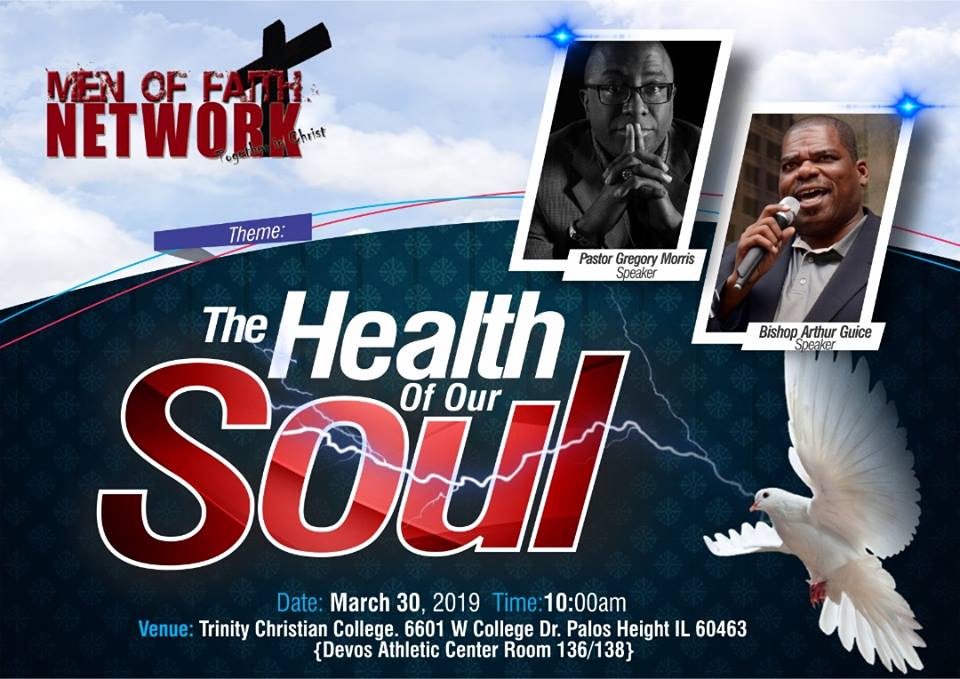
March 30th 2019

How Healthy is Your Soul?

At the core of who we are is our soul. Many have said that the soul houses the mind, will, and intellect of an individual. Because of the soul identifies who we are at our core, it is vitally important to maintain the health of our souls. God has an expectation for us to maintain spiritually healthy souls. In Ezekiel 18, God made clear to Ezekiel that children would no longer be impacted by their fathers’ “sour grapes” (decisions). An important distinction God made in Ezekiel was that ALL souls belong to Him, and each soul is accountable to the Father individually.

How does God see your soul? How do you see your soul? Is your soul healthy or hurting? Join us Saturday, March 30th as Pastor Gregory Morris and Bishop Arthur Guice provide us with a physical examination for our souls!

We will see you there!

– MOFN

Septemter 2019 Fellowship Meeting

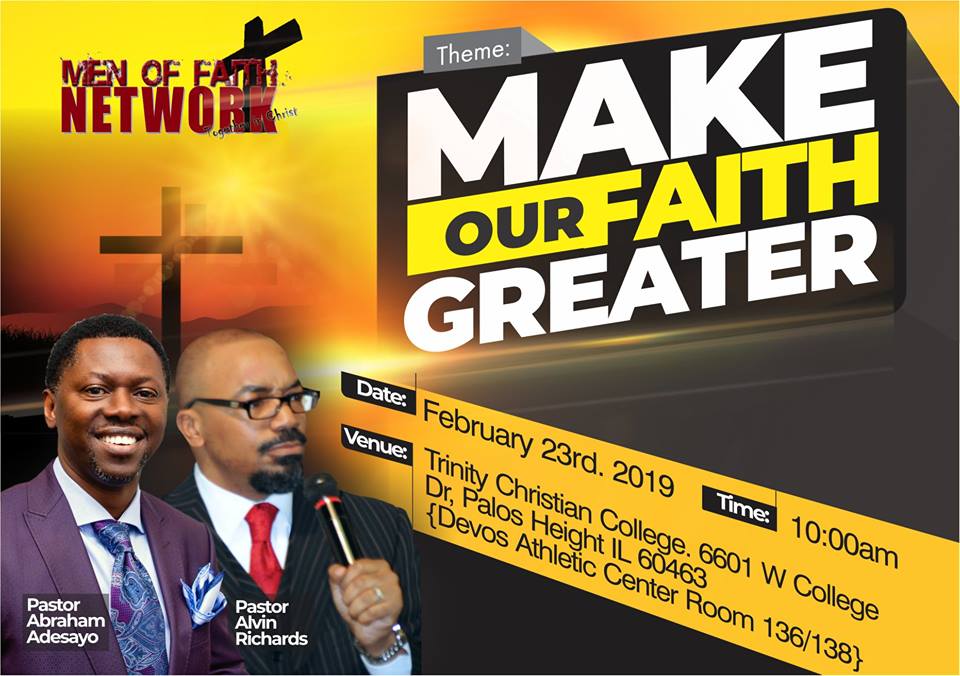
Luke 17:5 

The apostles said unto the Lord, Increase our faith.–The form in which the fragment that thus commences is brought before us suggests, as has been stated before (see Notes on Luke 7:13; Luke 10:1), that it was a comparatively late addition to the collection of “the words of the Lord Jesus” (Acts 20:35), and this is confirmed by the exceptional use of “the Apostles” for “the disciples.” It may have stood originally in an absolutely isolated form. On the other hand, its position here indicates a sufficiently traceable sequence. That command of a seven-fold–i.e., an unlimited–forgiveness seemed to make almost too great a strain on their faith. Did it not imply an almost miraculous victory over natural impulses, that could be wrought only by a supernatural grace? Was not the faith that could “remove mountains” wanted, if ever, here–a faith in the pardoning love of the Father, and in their own power to reproduce it? And so, conscious of their weakness, they came with the prayer that has so often come from the lips of yearning, yet weak, disciples of the Christ–reminding us of him who cried, “Lord, I believe; help thou mine unbelief” (see Note on Mark 9:24)–“Increase our faith.” May we not possibly think of Peter as having struggled to obey the rule which had been given to them before (Matthew 18:22), and as having found himself unequal to the task?

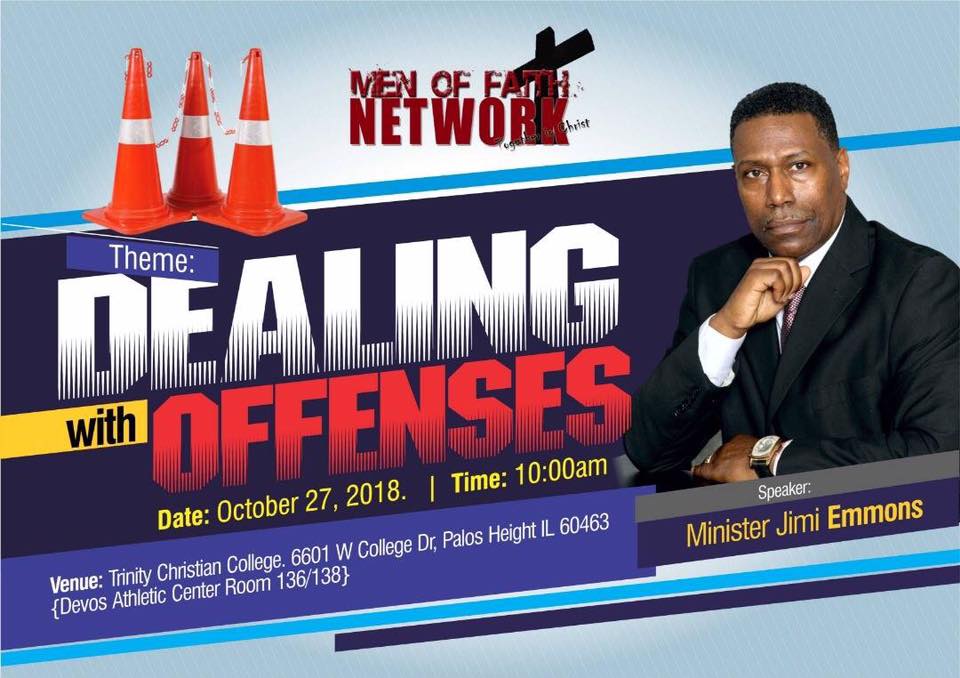
October 27th 2018 Fellowship Meeting

Brethren… What’s your Saturday morning looking like? Hope you can meet us!

Offenses Will Come
Inevitably, we will experience offenses by other people. Jesus said so Himself in Luke 17:1, “Then said he unto the disciples, ‘It is impossible but that offenses will come: but woe unto him, through whom they come!'” By the term offenses, Jesus was referring to opportunities to stumble! When put in the proper perspective, Jesus was teaching that there will be moments when others will do or say things that will challenge our response. We can either respond gracefully or in ways that provoke sin.

As believers, God places a premium on how we handle people. It is often said, “Why are Christians supposed to be so forgiving and turn the other cheek?” as if nothing happens to the other person. Looking at Luke 17:1 the “woe” is assigned to the offender! Additionally, as Christians, we are expected to show Christ in how we conduct ourselves. So, how do we Christians handle offense?

Join us as Minister Jimi Emmons sheds light on this month’s theme, “Dealing with Offenses”. Our gathering is sure to be an amazing journey through scripture as the topic of offenses is unpacked!

Meet you there!

– MOFN


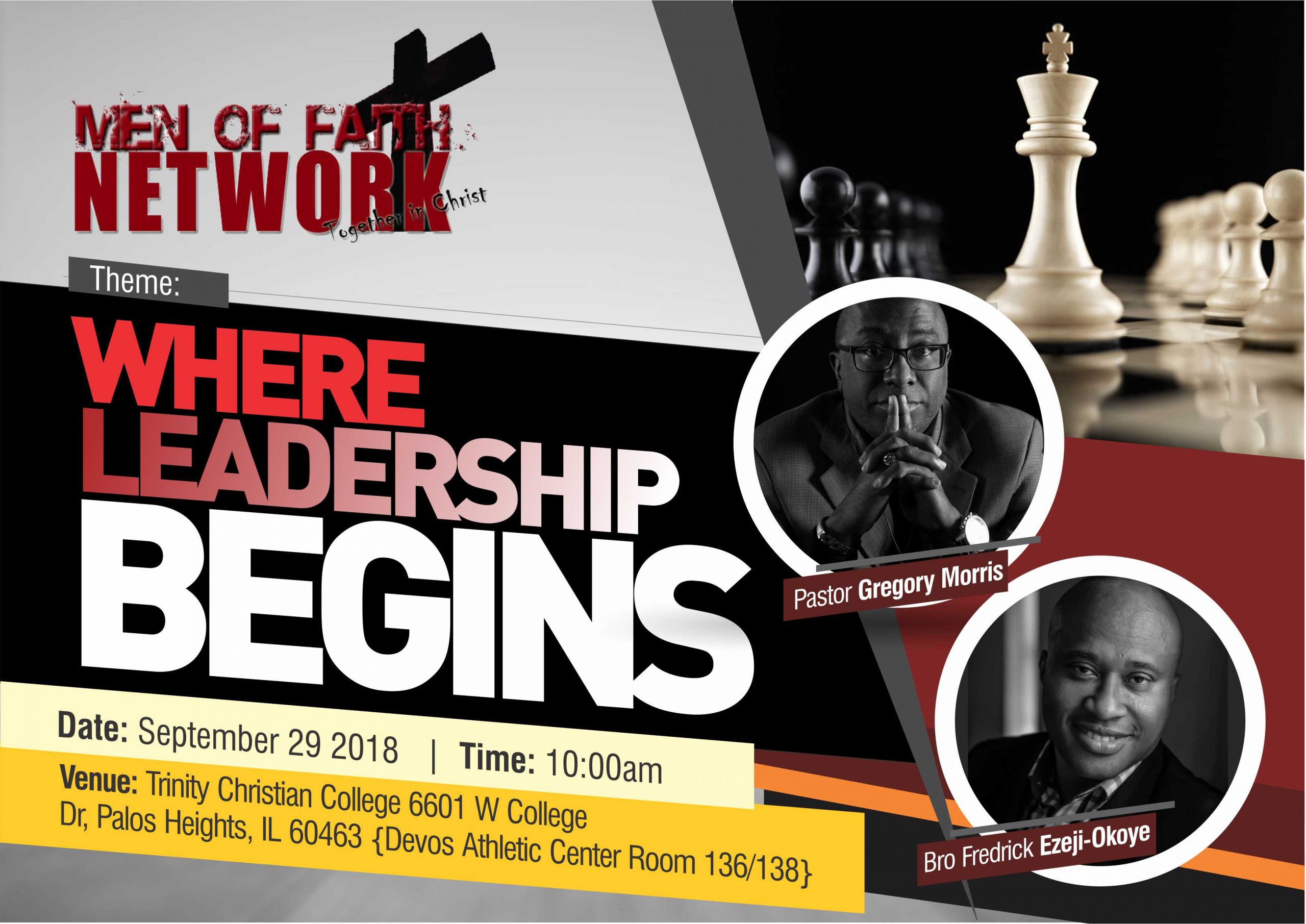
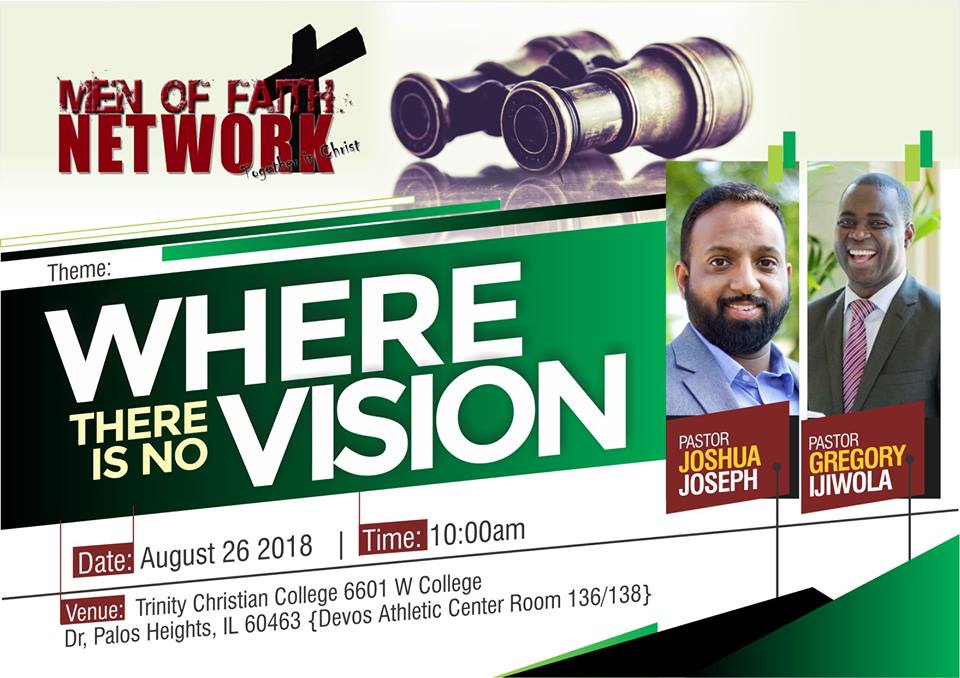
September 2018 Fellowship Meeting

Principles of Leadership:

Leaders understand the value of solitude.

Leaders spend lots of time alone.

Leaders understand that times of quiet are vital in life.

In the quiet we receive a clear vision from God.

We will never have the vision and the power amidst the noise and clatter of this world … we must get alone w/ God!

A leader sees more in the night than others see in the light.

Leaders understand the importance of solitude.

Leaders patiently gather all the facts.

Leaders don’t rush into a project ill prepared.

Before you can lead you have to learn. Leaders make a mess of things when they try to lead w/out doing their homework.

Nobody seems to have the time to do it right, but everybody finds the time to do it over. “Measure twice, cut once!”

Leaders keep their eye on the big picture.

Micromanagers and control freaks wear out and break down quickly!

Leaders carefully choose their words.

August 2018 Fellowship Meeting

The cry of people today is, “Show me how to live my life.” Give me meaning and understanding in this crazy world in which I live.” Godly Biblical preaching has to do with communicating the Word of God as truth, understood and applied. That will convict the sin-sick soul of his need for God. It will instruct the believer in the ways of righteousness. And it will never return to the Lord void! 

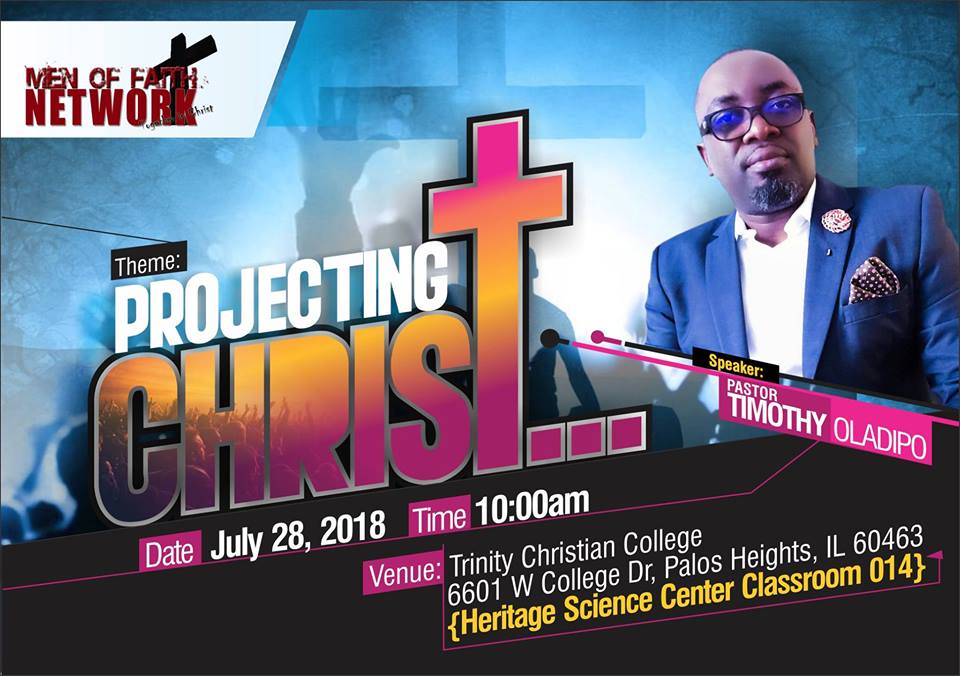
July 28, 2018

Many times we Christians freely declare that we choose Christ; that we are Jesus followers. This is truly a great confession of one’s faith! Beyond “choosing” Christ, we must also PROJECT Christ! Projecting Christ is more than just attending service at church on Sunday morning, it is a daily lifestyle. 

Matthew 28:19 instructs us to go and make disciples of the nations. This literally means raise up people to follow the teachings of Jesus Christ as taught in the Gospels.

Do others around us SEE Christ in us? Do they HEAR Christ from us? Do they FEEl Christ Through us?

How do you PROJECT Christ? Join Men of Faith Network on July 28th 2018 at 10:00am at Trinity College in Palos Heights in the Heritage Science Center Room 014.